About the Library painter
Views in the Library
painter
The Library painter has two views, the Tree view and the List
view, that can display all the files in your file system, not just
PowerBuilder objects. You use the painter primarily for displaying and
working with workspaces, targets, library files (PBLs), and the objects
they contain.
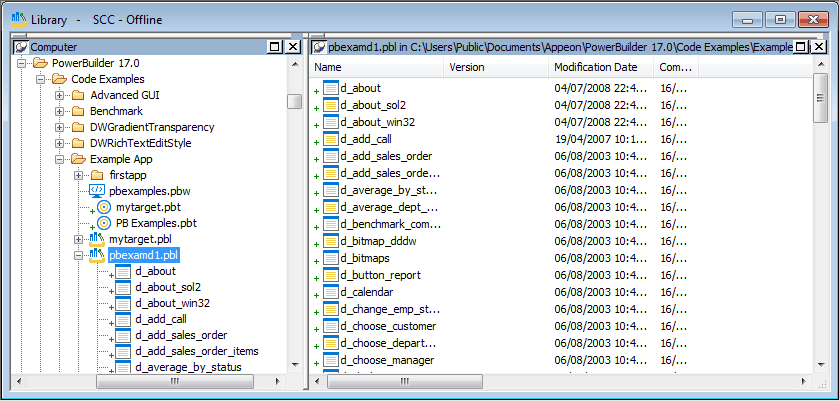
The Tree and List views are available from the View menu. By
default, the Library painter displays one Tree view (on the left) and
one List view (on the right). When the Library painter opens, both the
Tree view and the List view display all the drives on your computer,
including mapped network drives.
Using the System Tree
The Workspace tab page in the System Tree works like a Tree view
in the Library painter. You can perform most tasks in either the System
Tree or the Library painter Tree view, using the pop-up menu in the
System Tree and the pop-up menu, PainterBar, or menu bar in the Library
painter. When you have the System Tree and a Library painter open at the
same time, remember that the PainterBar and menu bar apply only to the
Library painter.
Each time you click the Library painter button on the PowerBar,
PowerBuilder opens a new instance of the Library painter. One advantage
of using the System Tree is that there is only one instance of it that
you can display or hide by clicking the System Tree button on the
PowerBar.
About the Tree view
The Tree view in the Library painter displays the drives and
folders on the computer and the workspaces, targets, libraries, objects,
and files they contain. You can expand drives, folders, and libraries to
display their contents.
About the List view
The List view in the Library painter displays the contents of a
selected drive, folder, or library and has columns with headers that
provide extra information. For libraries, the comment column displays
any comment associated with the library. For objects in libraries, the
columns display the object name, modification date, size, and any
comment associated with the object. You can resize columns by moving the
splitter bar between columns, and you can sort a column’s contents by
clicking the column header.
About sorting the Name column
When you click the Name column header repeatedly to sort, the
sort happens in four ways: by object type and then name, in both
ascending and descending order, and by object name, in both ascending
and descending order. You might not easily observe the four ways of
sorting if all objects of the same type have names that begin with the
same character or set of characters.
Displaying items in the Tree view and the
List view
Most of the time, you select a library in the Tree view and
display the objects in that library in the List view, but at any time,
you can set a new root or move back and forward in the history of your
actions in the List view and the Tree view to display libraries or other
items. For more information, see Setting the
root and Moving back, forward, and up one
level.
Using custom layouts
You might find that having more than one Tree view or List view
makes your work easier. Using the View menu, you can display as many
Tree views and List views as you need.
The following screen shows the Library painter with one Tree view
and three List views.
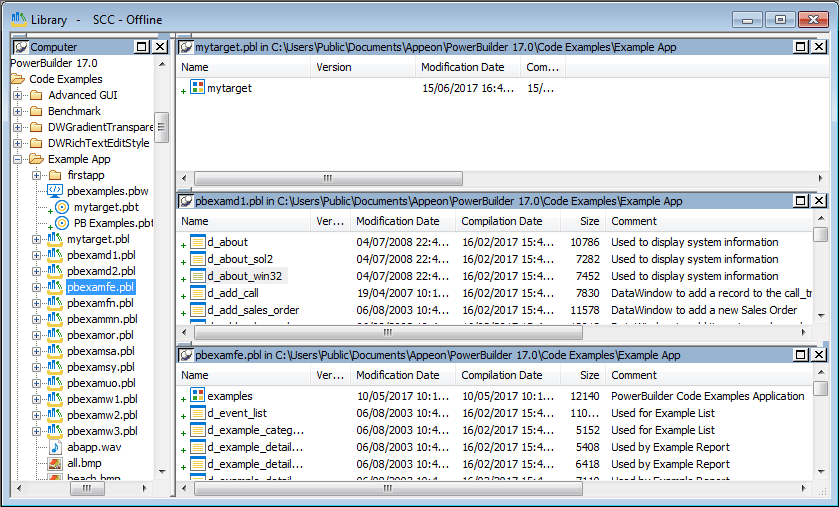
You can filter the objects in each of the List views so that one
List view shows menus, another windows, and another user objects. For
information about filtering objects in a view, see Filtering the display of objects.
To get this layout in the Library painter, use the View menu to
display two more List views and then manipulate the views to fit this
layout. For information about opening and closing views, manipulating
views, returning to the default view layout, or saving your favorite
layouts, see Using views in
painters.
View synchronization
Tree and List views are synchronized with each other. When you are
using more than one Tree view or List view, changes you make in one type
of view are reflected in the last view you touched of the other type.
For example, when an item is selected in a Tree view, the contents of
that item display in the List view that you last touched. When you
display new contents in a List view by double-clicking an item, that
item is selected in the Tree view you last touched (if it can be done
without resetting the root).
Each List view in the previous screen displays the contents of a
different library because three libraries were dragged from the Tree
view and dropped in different List views. For information about drag and
drop, see Displaying libraries and
objects.